TransformingHow CitiesAre ShapedTrans-formingHowCitiesAreShaped

For high-stakes spatial decisions

— from data to strategy to design.

Scroll to Explore

01

Cities are complex systems shaped by disconnected decisions across multiple domains.

Most spatial decisions fail not because of missing data — but because of how people process it.

Policy, urban planning, development, architecture and engineering each operate with their own rules, tools and timelines. They all focuses on what it defines as a successful outcome.

As a result, the same site is understood differently by each discipline — making shared understanding difficult, not just inconvenient.

Without a common approach, critical decisions are made in isolation — at every stage of a project.

The result is predictable: fragmented outcomes, misaligned priorities, and built environments that fail to satisfy stakeholders.

FIG. 01

Spatial Decisions Fragmentation

Policy &
Governance
Regulatory framework
ESG & Compliance requirements
Approval processes
Real Estate
Development
Financial modeling
Market analysis
Return optimization
Urban
Planning
Zoning frameworks
Land use policy
Density regulations
No integration
Cognitive misalignment
Conflicting priorities
Fragmented outcomes
Architectural
Design
Concept development
Design documentation
Technical coordination
Engineering &
Specialty Design
Structural engineering
MEP systems
Specialist consultants
METHOD

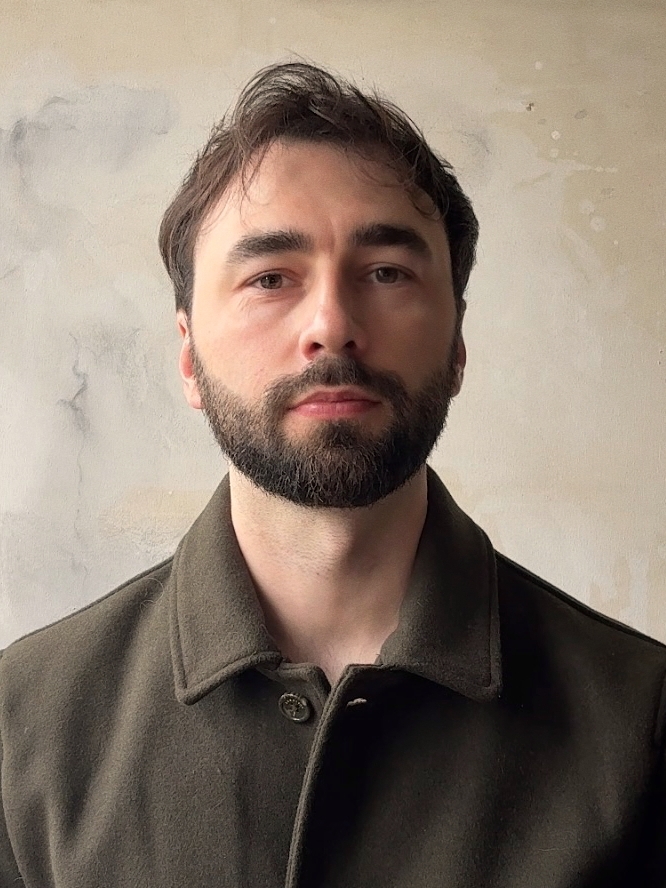
SpatialMore was founded by architect
Bartosz Kołodziej to connect
decision-making and spatial design
for developers, cities and organizations.

Founder's Story
2013
Architectural practice — Poland, France Office buildings. Commercial interiors. Observing how spatial decisions shape outcomes.
2017
Infrastructure architecture — Germany Metro stations. Residential developments. A pattern emerges: systematic approach is critical.
2024
Research into decision-making Behavioral economics applied to architecture
at SGH Warsaw School of Economics.
2026
Founding SpatialMore Decision Intelligence meets design.

Real estate development is defined by decisions made early, when uncertainty is highest and reliable analysis is often missing.

SpatialMore's approach brings structure and data into those critical moments. The result is faster decisions, reduced risk, and capital deployed with greater confidence — grounded in spatial reality rather than assumptions.

Site Potential

What the location can deliver — assessed against market reality, spatial context and development constraints.

Spatial IntelligenceDecision Intelligence
Investment Decision

How the choice is structured — so analysis, scenarios and stakeholder perspectives converge into a clear direction.

Spatial IntelligenceDecision Intelligence
Spatial Concept

Decision translated into form — the architectural argument that makes the strategy visible and communicable to everyone involved.

Decision IntelligenceSpatial Translation

Cities face high-impact decisions with fragmented data, competing interests and limited time for analysis.

SpatialMore's approach brings structure and clarity to that complexity. Better urban decisions require better tools — enabling cities to act with confidence, align stakeholders and shape more coherent urban outcomes.

Urban Diagnosis

Where the city performs and where opportunity lies — mapped across mobility, services, environment and economic activity.

Spatial IntelligenceDecision Intelligence
Strategic Direction

How competing priorities become a shared, defensible decision — structured so stakeholders align around the same evidence.

Spatial IntelligenceDecision Intelligence
Spatial Framework

Direction translated into urban form — structure, density and public space aligned with strategic intent.

Decision IntelligenceSpatial Translation

Organizations face spatial decisions when adapting existing sites, upgrading buildings or planning new locations. These decisions are complex, long-term and difficult to reverse.

SpatialMore brings structure and clarity to this process. Better spatial decisions enable organizations to use space more effectively, adapt to change and invest with greater confidence.

Space Performance

How your locations and spaces work — and where targeted change delivers the greatest impact.

Spatial IntelligenceDecision Intelligence
Location Decision

How complex, long-term spatial choices are structured — with clarity on trade-offs, risks and the conditions for confident investment.

Spatial IntelligenceDecision Intelligence
Spatial Concept

Selected direction translated into spatial and architectural form — aligned with feasibility, quality and long-term performance.

Decision IntelligenceSpatial Translation

02

Three interconnected domainsSpatial Intelligence, Decision Intelligence and Spatial Translation.

FIG. 02

Domain Architecture

SpatialMore
Spatial
Intelligence
Site and context analysis
Multi-site evaluation and comparison
Constraint and potential mapping
Decision
Intelligence
Stakeholder alignment and consensus design
Bias identification and mitigation
Scenario evaluation and selection
Trade-off and risk analysis
Spatial
Translation
Architectural concept development
Urban spatial framework
Design brief and guidelines

Spatial decisions span multiple domains — from data to strategy to design.

Spatial Intelligence turns location data into decision-ready intelligence.

Decision Intelligence structures how that intelligence becomes a decision — aligning stakeholders and making choices defensible.

Spatial Translation turns strategy into spatial form.

Each layer informs the others. None operates in isolation.

03

Every spatial challenge moves through a structured process — from raw data to spatial form.

Spatial decisions are shaped as much by measurable evidence as by cognitive patterns.

Our process is built to bridge this gap — structuring what is known, challenging how it is interpreted, testing what is uncertain, and turning decisions into clear spatial forms.

It is built for developers, cities and institutions facing decisions that are too consequential to get wrong.

FIG. 03

Integrated Spatial Process

Spatial Intelligence
Decision Intelligence
Spatial Translation
Input
Data
Comprehensive spatial data from multiple sources.

Urban data, demographics, economic indicators, environmental factors and regulations are combined into a single, coherent view of the site — clarifying what is known from the outset.
Processing
Analysis
Revealing patterns and relationships.

Spatial relationships are analyzed to identify correlations, assess constraints and evaluate development potential — uncovering what can and cannot be built.
Exploration
Scenarios
Exploring possible development paths.

Multiple scenarios are generated and tested against changing conditions — including market shifts, regulatory changes and environmental factors — to understand how different decisions shape outcomes.
Iteration
Decision
Strategy
Turning insight into decisions.

Analysis and scenarios converge into clear strategic choices — grounded in data, tested through modeling, aligned with stakeholder priorities, and aware of potential cognitive bias in decision-making.
Output
Design
Translating strategy into built form.

Design is not an afterthought. It is integrated throughout the process — ensuring that strategic decisions become buildable architecture and coherent urban outcomes.
SI Spatial Intelligence DI Decision Intelligence ST Spatial Translation
CONTEXT

04

Latest updates — milestones on SpatialMore's path.

EEC Startup Challenge
20.03.2026

SpatialMore Selected for EEC Startup
Challenge Semifinals

We're honored to be among 80 semifinalists selected for the @EEC Startup Challenge at the @European Economic Congress in Katowice, Poland.

The @EEC Startup Challenge is a major international platform connecting innovative young companies with investors and industry leaders seeking new opportunities and inspiration.

The grand finale will take place on April 23, 2026 at the International Congress Centre in Katowice.

Social Media EEC Startup Challenge: Facebook → estartupdays X → estartupdays Instagram → eecstartupchallenge
#EECStartupchallenge #EEC2026
Want to stay updated?
Follow our profile on LinkedIn

05

SpatialMore was founded by Bartosz Kołodziej — an architect working across Poland, Germany and France on residential, commercial and infrastructure projects.

Bartosz Kołodziej studied Architecture and Urban Planning at Cracow University of Technology, graduating in 2014. His early experience includes work at Nicolas Laisné Architectes in Paris on competition-winning residential developments, followed by projects in Poland across commercial interiors and office developments, including at nsMoonStudio in Kraków.

In 2017, he moved to Germany and joined netzwerkarchitekten in Darmstadt, where he worked on large-scale public infrastructure — metro stations in Munich and Hamburg — across all project phases, from concept to execution.

Across these contexts, he observed that critical spatial decisions — about where to build, what to build and how to prioritize — are shaped by multiple stakeholders and constraints, making structured decision frameworks increasingly important.

To explore this further, he expanded his work beyond architecture, completing postgraduate studies in management at Warsaw School of Economics (SGH), focusing on the application of behavioral economics to decision-making in spatial practice. His research received recognition in the 2025 Scientific Award Competition of the Polish Chamber of Architects (IARP).

SpatialMore was founded as a response — bringing together spatial analysis, decision-making and design into one coherent process.

Founder's profile on LinkedIn
Helping developers, cities and organizations make better spatial decisions — and translating them into design and development.

Spatial decisions shape places for decades. They determine what gets built, where, and for whom — and are made under conditions of real complexity: multiple stakeholders, incomplete data, and competing priorities.

SpatialMore brings structure to this process — integrating Spatial Intelligence, Decision Intelligence and Spatial Translation into a single practice that connects data, decisions and spatial form.

We work with developers, cities and organizations facing high-impact spatial decisions — from large-scale investments to the transformation of existing spaces. In each case, the outcome depends on the quality of the decision process behind it.

SpatialMore is built to make these decisions with greater clarity, coherence and confidence — and to ensure that what is decided translates into what gets built.

A new kind of spatial practice — where defining problems, making decisions and translating them into spatial form matter more than any single tool.

Artificial Intelligence has mastered the digital world. What comes next — as Fei-Fei Li, AI pioneer and founder of World Labs, argues — are Large World Models (LWMs): systems that understand the physical environment. Space, not just text. Context, not just content. This marks the emergence of Spatial Intelligence as an infrastructural capability.

At the same time, the challenge is no longer access to data, but knowing what to do with it. Decision Intelligence — the structured design of how choices are made — is becoming as critical as the analysis that informs them.

Architecture, meanwhile, is under pressure to redefine its role. As Reinier de Graaf — architect, writer and partner at OMA — argues in Architecture Against Architecture: Manifesto, the authority of the profession is eroding and its methods are no longer tenable.

The boundaries between technology, strategy and design are dissolving. SpatialMore is built for this shift — working at the intersection of Spatial Intelligence, Decision Intelligence and Spatial Translation, where data becomes strategy and strategy becomes space.

The role of the architect is changing with it. From designing objects to structuring processes. From producing form to defining problems and directing how they are solved.

In this environment, human judgment becomes more critical — not in competing with machines, but in directing them. Filtering signal from noise. Maintaining coherence across systems no single tool can resolve. Machines generate. Humans decide what matters.

Let's
talk